
Blogs
- Home
- Blog details
How to Choose a Chocolate Melanger Capacity for Your Business
- By : Deepak
Short answer: choose a chocolate melanger by the amount of finished chocolate you need per production cycle—not by the largest machine your budget allows. Calculate your realistic weekly output, account for refining time, cleaning and recipe changes, then select a capacity that can handle normal demand with some practical headroom.
A melanger that is too small becomes a production bottleneck. One that is unnecessarily large can tie up capital, occupy valuable floor space and make small recipe trials inconvenient. The right machine should match your products, batch schedule, utilities and next stage of growth.
This guide explains how to compare commercial melanger capacities without confusing nominal batch capacity with actual production throughput.
What does melanger capacity mean?
Melanger capacity normally describes the approximate mass of product the drum is designed to hold during a batch. It does not automatically tell you how many kilograms the machine will produce per hour or per day.
Actual throughput also depends on:
- the recipe and its viscosity;
- the starting particle size of the ingredients;
- the texture and particle-size target;
- the refining and flavour-development time;
- loading, discharge and cleaning time;
- the number of recipes or origins being processed;
- planned maintenance and production downtime.
That distinction matters. A 10 kg melanger does not necessarily deliver 10 kg every few hours. Chocolate refining can be a long production stage, and different recipes can require different operating times. Capacity planning must therefore begin with the complete batch schedule.
Start with the product you intend to make
The first question is not “Which machine is cheapest?” It is “What will run inside it?” A bean-to-bar maker producing several single-origin dark chocolates has a different workflow from a business producing one high-volume recipe.
Write down the following before asking for a quotation:
- your primary product: dark chocolate, milk chocolate, spreads or another approved recipe;
- the number of recipes or SKUs;
- the desired quantity of each recipe per week;
- the expected refining duration for each recipe;
- whether the machine will be used for trials, regular production or both.
If you change recipes frequently, several manageable batches may be more useful than one oversized batch. If you make one recipe repeatedly, a larger-capacity unit may reduce loading and cleaning cycles.
Calculate required batch capacity from the production schedule
Use this simple planning method:
- Estimate the kilograms of chocolate required per week.
- Estimate how long one refining cycle takes for your recipe.
- Add time for loading, discharge, cleaning and planned downtime.
- Calculate how many complete cycles realistically fit into the week.
- Divide weekly demand by the realistic number of cycles.
- Add reasonable headroom for demand variation and growth.
Example: if a business needs 30 kg of one recipe per week and can reliably complete three production cycles, its working requirement is approximately 10 kg per cycle. It should then confirm whether a nominal 10 kg model provides the necessary operating margin for that recipe or whether the next capacity is more practical.
Do not treat this example as a guaranteed production rate. Recipe behaviour, loading limits and process time must be confirmed during machine selection.
Do not plan to run every batch at the absolute limit
A machine should not be chosen on the assumption that every production run will always use its maximum nominal capacity. Chocolate must circulate and move correctly around the stone-grinding system. An unsuitable load can affect movement, refining behaviour and operator control.
A practical buffer also gives the business room for:
- seasonal demand;
- larger wholesale orders;
- minor recipe variation;
- production losses during transfer and cleaning;
- future growth without an immediate second purchase.
The correct working load should always be confirmed with the manufacturer for the intended product.
Compare the machine beyond kilograms
Capacity is important, but it is only one part of the buying decision. Compare the complete working system.
1. Construction and food-contact surfaces
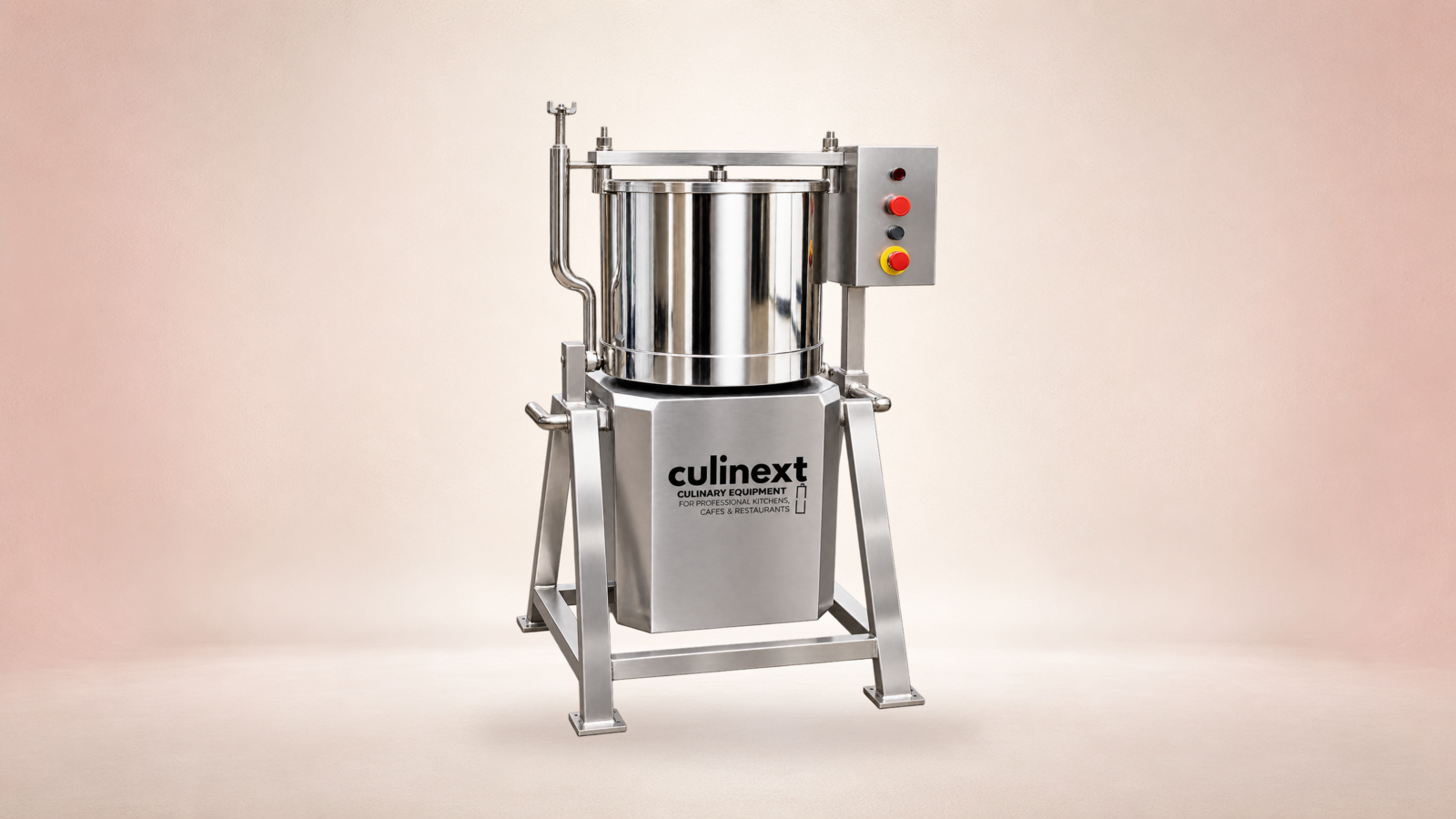
Check the materials used for the drum, frame and food-contact components. A commercial machine should support hygienic production, repeated cleaning and long operating cycles. The Culinext Premium Chocolate Melanger uses a food-grade SS304 build with a natural black-stone grinding system.
2. Motor and duty cycle
Ask whether the motor and drive system are designed for the intended batch size and operating duration. Do not compare machines only by horsepower: the complete mechanical design, load, gearing and recipe behaviour affect performance.
3. Speed control
Speed control gives the operator another process variable during loading and refining. Ask how the controller is used, what operating range is recommended and whether training is provided for your recipe type.
4. Discharge and handling
A large batch is useful only if it can be discharged and transferred safely. Consider drum tilting, outlet access, working height, the receiving vessel and the route to the next machine. The Culinext Premium range uses a tilting drum to support product discharge.
5. Electrical supply and protection
Confirm voltage, phase, connected load, plug or isolator requirements and circuit protection before ordering. Culinext offers a 1–5 HP motor range across its Premium Melanger variants, depending on model, with built-in MCB protection. The exact requirement should be confirmed for the selected capacity.
6. Cleaning and recipe changeover
If the same machine will process dark, milk or flavoured products, plan the changeover procedure in advance. Ask which parts are accessible, how residual chocolate is removed and how much time should be reserved between allergen or recipe changes.
7. Installation space
Measure more than the machine footprint. Include operator access, drum-tilting clearance, raw-material movement, discharge containers, electrical access and a safe cleaning area. A compact machine placed badly can be less productive than a larger machine in a well-planned workflow.
Which melanger size suits each stage of business?
| Production situation | Capacity approach | Main priority |
|---|---|---|
| Recipe development and micro-batches | Choose a compact model that makes trials and frequent changeovers practical. | Flexibility and low batch commitment |
| New commercial chocolate brand | Match capacity to proven weekly sales with room for expected growth. | Cash flow and dependable scheduling |
| Growing wholesale production | Calculate complete weekly cycles and identify whether a larger unit or an additional unit reduces the bottleneck. | Throughput and redundancy |
| Multiple origins or recipes | Compare one large machine with multiple smaller machines before deciding. | Scheduling and product separation |
| High-volume, repeat recipe | Consider larger-capacity refining or whether a different refining system better fits the scale. | Output and process economics |
One large melanger or two smaller machines?
One large machine can simplify operation and reduce the number of batches. Two smaller machines can provide more scheduling flexibility, allow different recipes to run independently and keep some capacity available if one machine is being cleaned or serviced.
Compare both options using:
- total weekly output;
- number of recipes;
- labour and cleaning time;
- available electrical load and floor space;
- the cost of production stopping if one machine is unavailable;
- your expected growth over the next 12–24 months.
There is no universal winner. The better configuration is the one that keeps the production calendar workable.
When should you consider a ball mill instead?
A melanger and a ball mill use different refining mechanisms and suit different production requirements. As output grows, do not automatically assume that the next purchase must be the largest melanger available. Compare product type, target texture, batch requirement, process time, maintenance and investment with the manufacturer.
Culinext offers stone melangers as well as commercial ball-mill solutions. A technical discussion can identify which route fits the recipe and production target.
Culinext melanger capacities
The Culinext Premium Chocolate Melanger range is available in 5 kg, 10 kg, 20 kg, 30 kg, 50 kg, 70 kg and 100 kg models. Confirm the current model specification, power requirement, installation clearance and suitable working load for your product before ordering.
You can also watch Culinext machinery demonstrations to understand the construction and working arrangement before a consultation.
Frequently asked questions
What size chocolate melanger should a startup buy?
A startup should choose from verified weekly demand, realistic refining cycles and available working capital. A compact commercial model is often easier for trials, but the correct size depends on the recipe and production plan rather than the age of the business.
Is a 5 kg melanger enough for commercial production?
It can suit small commercial batches, recipe development and businesses with modest weekly output. Whether it is enough depends on refining duration, the number of recipes and the quantity required per week.
Does a 10 kg melanger produce 10 kg per hour?
No. The 10 kg figure describes nominal batch capacity, not hourly throughput. Refining can take much longer, depending on the recipe, starting ingredients and target texture.
Should I buy extra capacity for future growth?
Some headroom is sensible, but buying far beyond foreseeable demand can increase cost, footprint and minimum practical batch commitment. Compare projected demand over the next 12–24 months with the flexibility of adding another machine later.
What details should I send when requesting a melanger quote?
Send the intended product, batch quantity, weekly output, expected refining time, recipe count, available voltage and phase, installation space and expansion plan. These details allow a more useful recommendation than asking for price alone.
Choose capacity from the workflow, not the brochure
The best melanger is not automatically the biggest or smallest. It is the machine that can produce your planned recipes on a realistic schedule, fit the facility and leave enough room for sensible growth.
Planning a new refining setup or replacing a production bottleneck? Share your product, batch requirement and available utilities with the Culinext engineering team for model-selection guidance and a commercial quotation.
Related Posts

Popular Tags
Related Posts
✕